
ABOUT CEM EUROPE
- 21–23 September 2027
- Dublin, Ireland
- 650+ Delegates
- 70+ Countries
dedicated to air quality and emission monitoring
CEM Europe Conference & Exhibition is the International Conference and Exhibition dedicated to air quality and emission monitoring. First held in 1997 in the United Kingdom, CEM has grown into a globally recognised meeting point for regulators, industry experts, technology providers, and operators focused on measuring, managing, and improving industrial emissions and ambient air quality. One focus of the conference is air quality monitoring networks, which shows how pollution is tracked across cities, industrial regions, and sensitive environments. These networks combine fixed monitoring stations, mobile systems, and advanced sensor technologies to deliver continuous, high-resolution data on key pollutants such as NOx, SO₂, particulate matter, VOCs, and greenhouse gases. Increasingly, there is also an emphasis on emissions measurement at lower levels, as regulatory requirements tighten and detection limits improve. This includes the need for more sensitive instrumentation capable of identifying trace concentrations that were previously difficult to measure reliably.
Alongside traditional pollutants, CEM also addresses the growing importance of emerging contaminants, including substances such as PFAS (per- and polyfluoroalkyl substances), which are gaining regulatory and scientific attention due to their persistence in the environment and potential health impacts. As monitoring expectations evolve, the conference highlights how laboratories, regulators, and technology providers are adapting methods to detect and manage these complex compounds within broader air quality and environmental monitoring frameworks.
CEM will discuss the latest regulations, monitoring technologies, and best practices for tracking emissions from industrial processes and strengthening air quality networks that support evidence-based decision-making. Delegates and visitors gain practical insights into improving compliance, environmental performance, and data accuracy across a wide range of sectors.
The 17th CEM conference and exhibition will take place in Dublin, Ireland, from 21–23 September 2027, building on the record attendance achieved at the 2025 edition in Ljubljana.
In 2027, CEM will run alongside the 6th Industrial Methane Measurement Conference, creating strong natural synergies. Both meetings share a focus on emissions measurement, monitoring innovation, and climate impact reduction. Co-locating these events enhances collaboration between air quality and methane measurement communities, supporting a more integrated approach to emissions inventories, atmospheric monitoring networks, regulatory alignment, and decarbonisation strategies across industry.
Topics & Themes
The CEM Europe Conference & Exhibition brings together a wide spectrum of technical, regulatory, and industrial topics that reflect the evolving challenges in air quality and emissions monitoring. These themes deal with tightening regulation, advancing measurement technology, and the global drive toward Net Zero and improved environmental accountability.
Air Quality Networks & Sensors
How modern monitoring networks are designed and operated. With the rise of low-cost sensors, hybrid monitoring systems, and real-time data platforms, attendees are interested in how to improve spatial coverage, data reliability, and regulatory acceptance of distributed air quality systems.
Emission Regulation & Future Monitoring Challenges
A key driver for attendance, this covers upcoming regulatory changes, compliance strategies, and how monitoring systems must adapt to more complex, data-driven enforcement requirements.
Greenhouse Gases & Net Zero
A central topic linked to climate policy, focusing on measurement accuracy for CO₂, CH₄, and N₂O across industrial and natural sources.
Biogenic Carbon Measurement
Increasingly important for distinguishing fossil CO₂ from naturally occurring or biomass-derived carbon. It directly supports carbon accounting, emissions trading schemes, and Net Zero reporting frameworks.
Methane Measurement & Hydrogen in Flue Gas
Growing in relevance due to the energy transition and hydrogen blending in combustion systems, requiring new approaches to combustion monitoring and safety.
Dust Measurement at Low Concentrations
Industries must detect particulate matter at ever-lower thresholds. This topic is critical for understanding health impacts, improving stack monitoring, and meeting compliance in sensitive environments.
Gaseous Species — HCl, HF, NH₃, SO₃, N₂O, TOC
Includes pollutants such as HCl, HF, NH₃, SO₃, CH₄, N₂O, CHOH, and TOC. These are increasingly important due to tighter detection limits and their relevance to air quality, health, and industrial compliance.
Mercury, Trace Metals & Trace Amines
Focuses on highly toxic pollutants requiring ultra-trace detection methods and strict regulatory compliance.
PFAS, Microplastics & Emerging Pollutants
A rapidly developing field addressing persistent and complex contaminants. Interest is driven by increasing regulatory scrutiny and the need for new analytical methods capable of detecting ultra-low concentrations in air and environmental samples.
Marine CEMS
Addresses emissions monitoring in shipping and offshore environments, increasingly important due to international maritime decarbonisation regulations.
Fence Line & Fugitive / Diffuse Emission Monitoring
Focused on detecting emissions escaping industrial sites, this is essential for environmental transparency, community impact assessment, and regulatory enforcement of diffuse sources.
Industrial IoT, Data Acquisition & Digital Solutions
Covers digital transformation in emissions monitoring, including connected devices, cloud platforms, data integrity, and real-time reporting systems.
Standards, QA & Measurement Uncertainty
Essential for ensuring consistency, comparability, and regulatory acceptance of emissions data across industries and jurisdictions.
Livestock & Agricultural Emissions
Agriculture is a major source of methane, ammonia, and nitrous oxide. This topic is of growing interest as governments expand emissions reporting to include non-industrial sectors.
Industrial Case Studies — Power, Cement, Waste, Chemical
Real-world insights from sectors such as power generation, cement, metals, chemicals, glass, mining, waste, and incineration. These sessions are highly valued for practical implementation lessons and benchmarking.
WHO SHOULD ATTEND CEM
The CEM Conference & Exhibition in Dublin is designed for professionals across a wide range of industries who share a common responsibility: to monitor, measure, and manage emissions and air quality from industrial processes and facilities.
Visitors and delegates typically include environmental managers, compliance officers, process engineers, laboratory specialists, regulators, consultants, and sustainability leaders from sectors such as power generation, cement, metals, chemicals, waste management, incineration, oil and gas, mining, and manufacturing. Increasingly, it also attracts experts working in emerging areas such as methane reduction, hydrogen systems, agriculture, and ambient air quality networks.
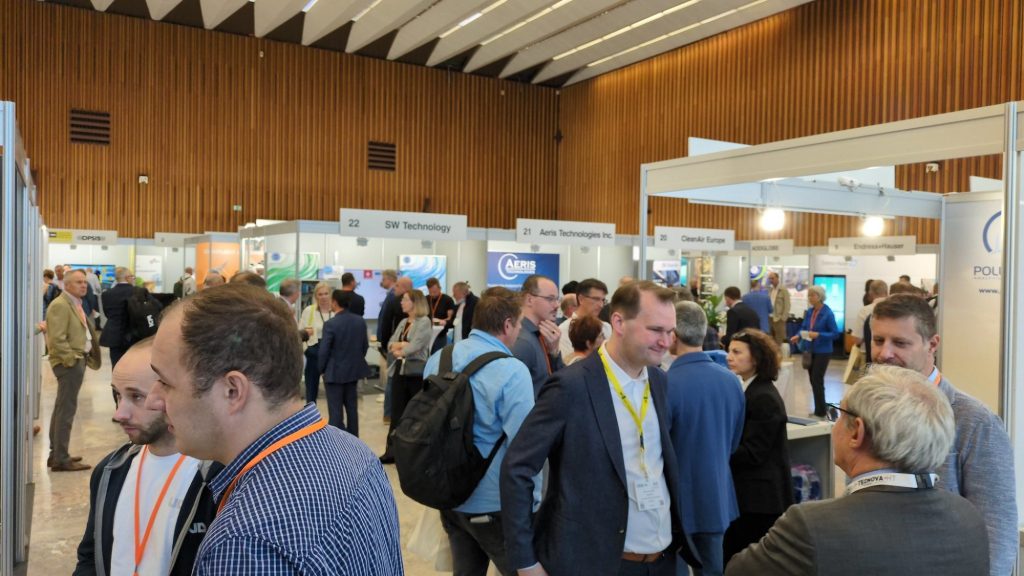
Key reasons to attend is the opportunity to gain direct access to the latest knowledge, technologies, and regulatory insight in one place. This in-person format of CEM Europe creates a unique environment where attendees can engage face-to-face with industry influencers, environmental regulators, technical experts, keynote speakers, and leading equipment and service providers from across the Emissions and Air Quality monitoring sector.
This concentration of expertise allows delegates and visitors to compare solutions, ask detailed technical questions, and receive practical, unbiased guidance on current and future regulatory requirements, monitoring strategies, and instrumentation performance. It is also an important opportunity to explore the newest innovations in air quality systems, emissions monitoring technologies, and digital data solutions as they emerge in the market.
Beyond the technical programme, CEM is a major networking hub. It enables connection between operators, regulators, and suppliers who are all working towards improving environmental performance and achieving more accurate, transparent emissions reporting. For many attendees, this combination of knowledge-sharing, hands-on learning, and direct supplier access makes CEM an essential event for staying ahead in a rapidly evolving regulatory and technological landscape.